Think in Probabilities – Not Outcomes – When You Bet Over/Under


Think in Probabilities – Not Outcomes – When You Bet Over/Under
When you bet on over/under markets – whether it’s the NFL, NBA, or college football – it’s easy to get caught up in recent results and gut feelings. “They’ve been scoring a ton lately, so the over has to hit again,” many bettors think. But that’s not how probabilities work. If you want to bet smart, you need to think in probabilities, not outcomes. It’s not about guessing what will happen, but about evaluating what could happen – and how often.
Results Can Trick Your Brain
Humans are wired to see patterns, even when they don’t exist. If a team has played three high-scoring games in a row, we assume it’s a trend. In reality, it might just be randomness – a mix of matchups, weather, and a few lucky breaks.
Take an NFL team that’s scored 35 points in back-to-back games. Many bettors will jump on the next over, say 48.5 points, thinking it’s a lock. But the sportsbook’s line already reflects that scoring surge. If you’re only reacting to recent results, you’re betting on the past – not on the true probability of what’s next.
Probabilities Change the Way You See the Game
Thinking in probabilities means asking, “How often would this happen if we played this game 100 times?” rather than “Will it happen this Sunday?” If you believe there’s a 55% chance a game goes over 45 points, and the odds imply only a 50% chance, that’s a valuable bet – even if the final score ends up 17–10.
That’s the key: a good bet can lose, and a bad bet can win. What matters is whether, over time, you’re betting on outcomes where the probability is in your favor. That requires accepting that single results don’t always reflect the quality of your decisions.
Use Data – But Understand the Context
Statistics are powerful tools for estimating probabilities. Average points per game, yards per play, pace, and red-zone efficiency all matter. But numbers alone don’t tell the full story.
A team that’s been scoring heavily might have faced weak defenses. Another team might look sluggish on paper but has played in bad weather or against elite opponents. Without context, you risk overestimating or underestimating the likelihood of a high- or low-scoring game.
Variance – The Invisible Force
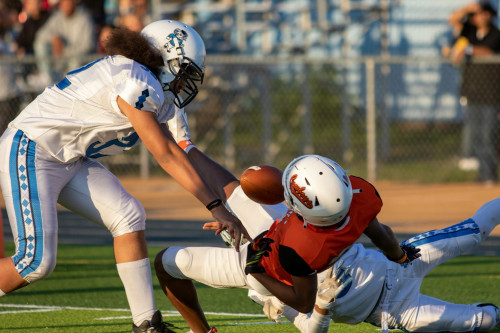
Even the best analysis can’t eliminate randomness. A fumble at the goal line, a missed field goal, or a questionable call can swing the total by several points. That’s variance – and it’s an unavoidable part of betting.
When you think in probabilities, you learn to live with variance. You understand that a losing bet isn’t necessarily a mistake, and a winning one isn’t always brilliance. The goal is to make good decisions consistently and let the math work in your favor over time.
Læs også:

How to Train Your Probability Thinking
Shifting from results-based thinking to probability-based thinking takes practice. Here are a few ways to build that mindset:
- Make your own estimates. Before checking the odds, decide what you think the probability is for the over or under. Then compare it to the sportsbook’s line.
- Track your bets. Record why you made each bet and how the game played out. Over time, you’ll see patterns in your reasoning – not just in your results.
- Think in series, not single bets. Judge your performance over 50 or 100 bets, not one. That’s how you see whether you truly have an edge.
- Accept randomness. You can make the right call and still lose. That’s part of the game.
Over/Under Is About Pace and Efficiency
At its core, over/under betting comes down to two things: pace and efficiency. How many plays will be run, and how many points does each play produce on average? A fast-paced but inefficient offense can still lead to low totals, while two efficient teams with fewer drives can push a game over.
By analyzing team styles, injuries, weather, and game context, you can form a more accurate picture of the probability of a high- or low-scoring matchup – far better than simply reacting to recent scores.
Conclusion: Bet on Probabilities, Not Feelings
Thinking in probabilities is the foundation of smart betting. It takes patience, discipline, and the ability to look beyond short-term results. When you focus on value instead of chasing “sure things,” you move from guessing to analyzing – and that’s where the difference between luck and skill truly lies.
Læs også: